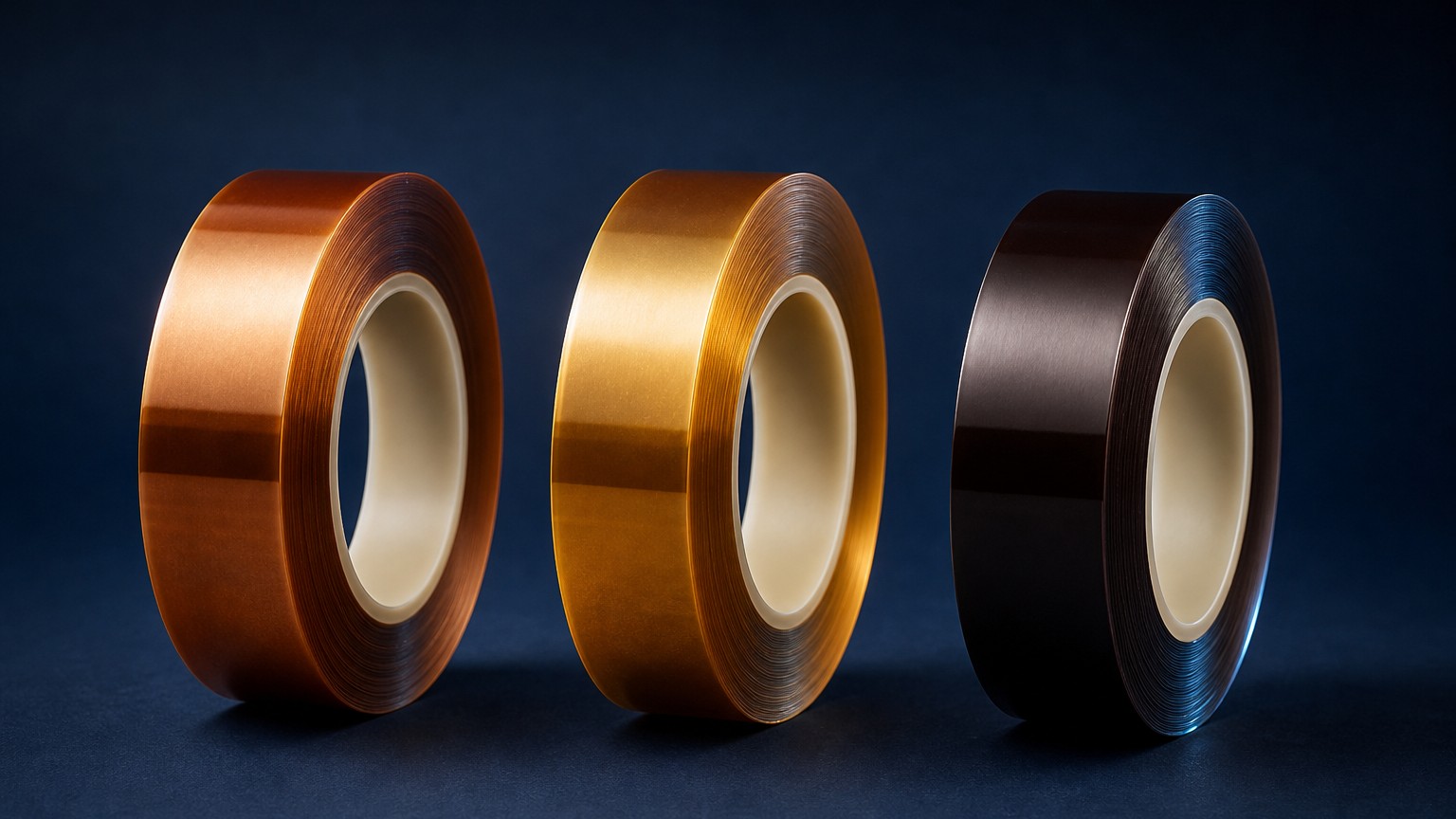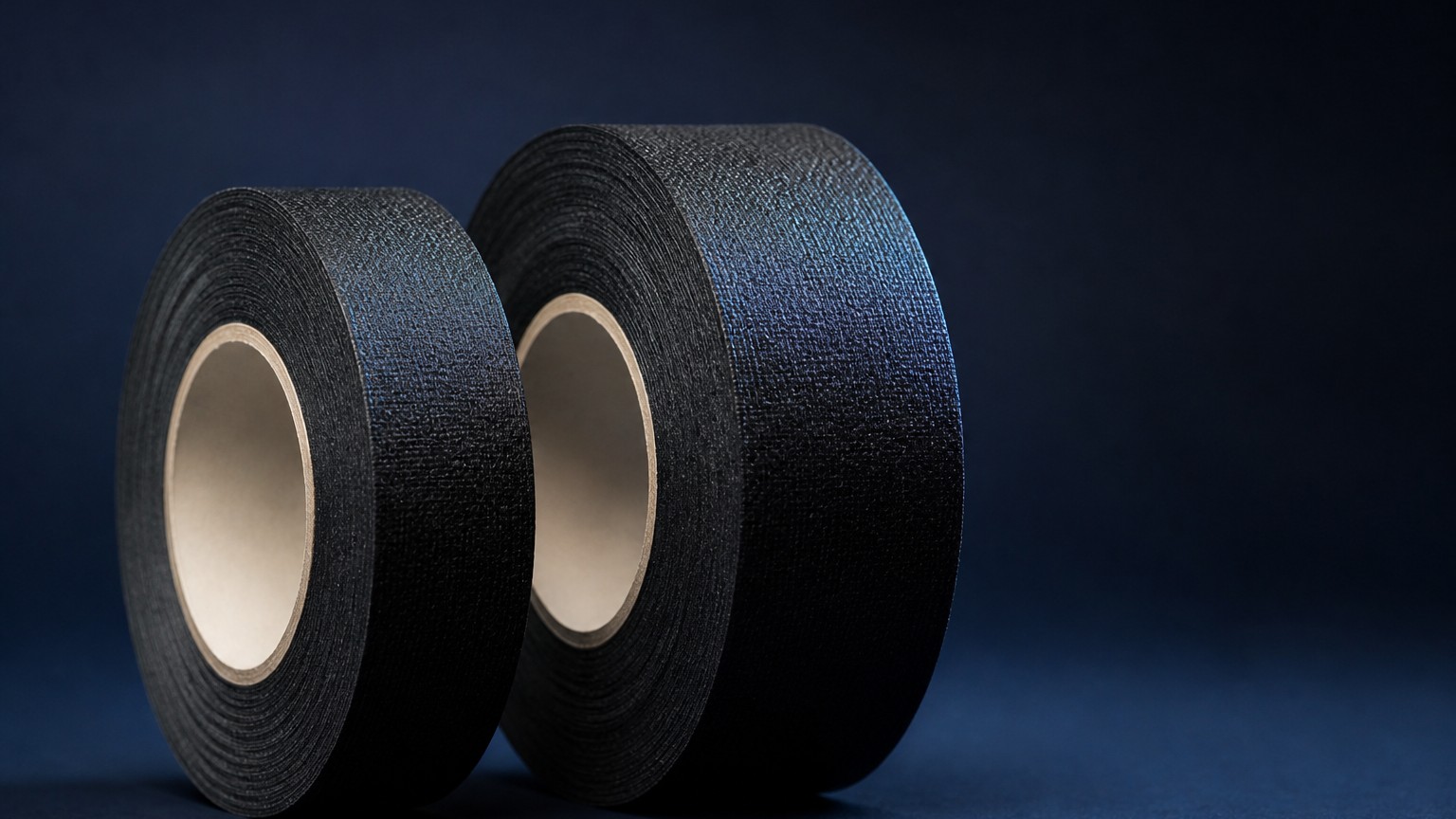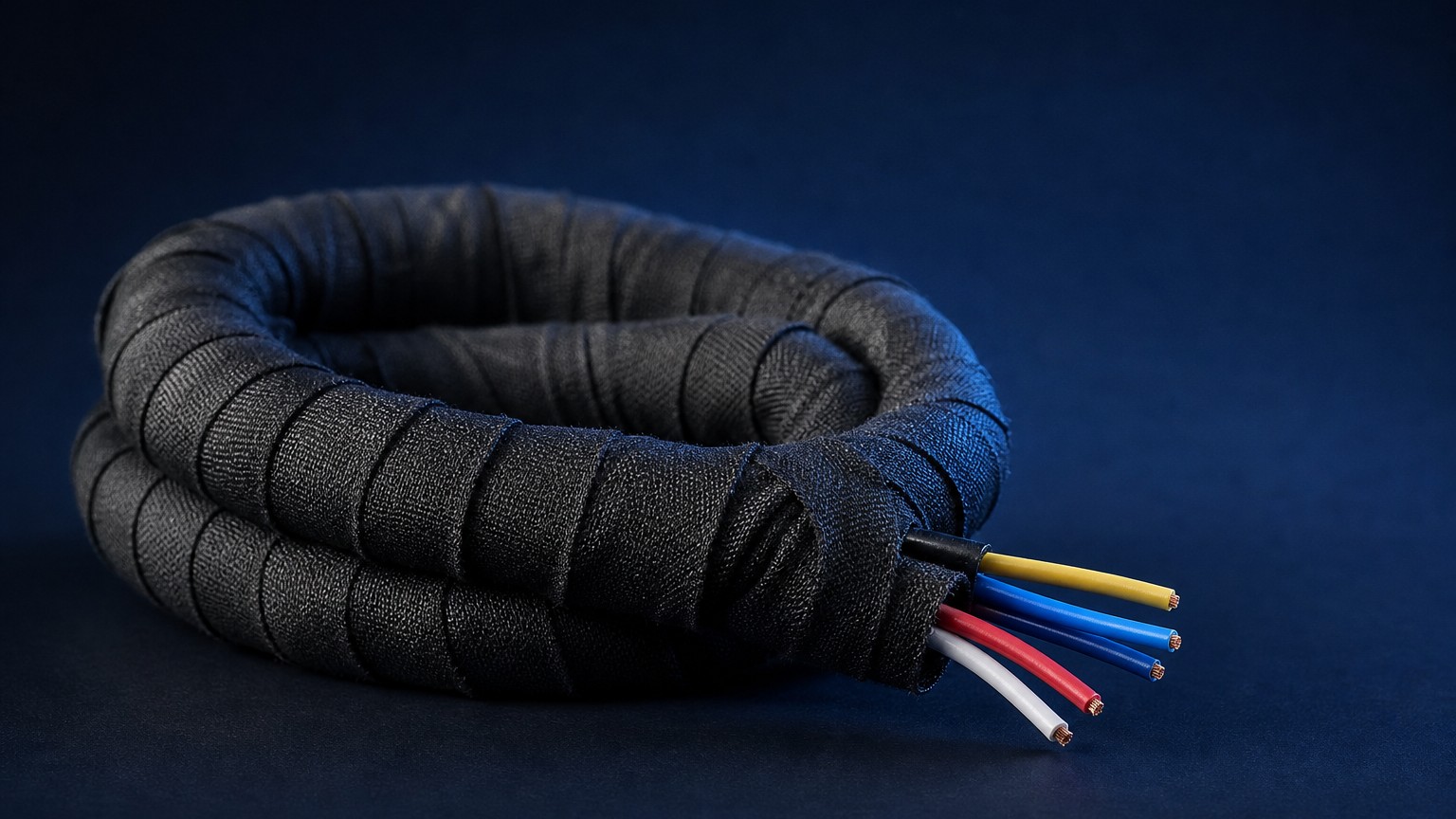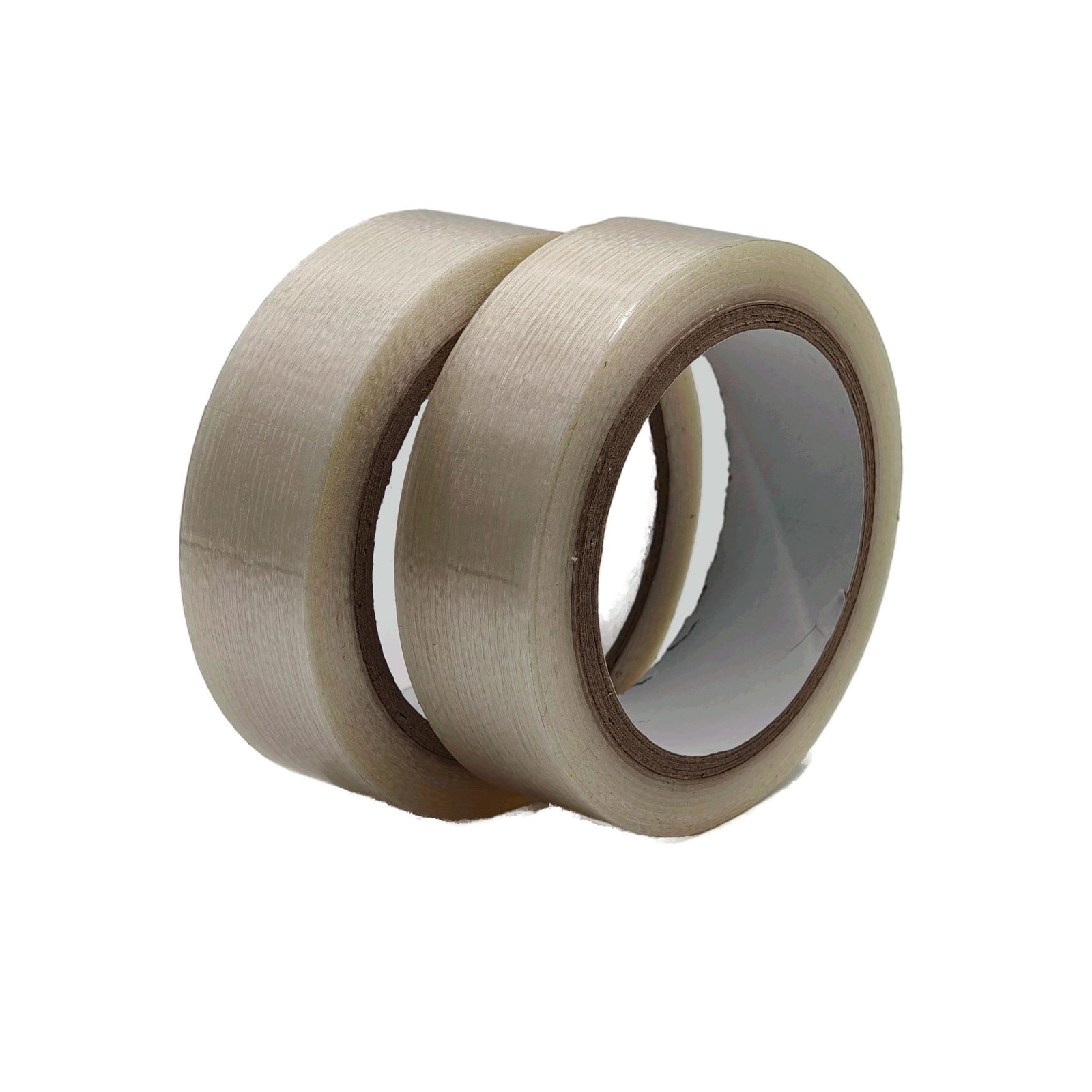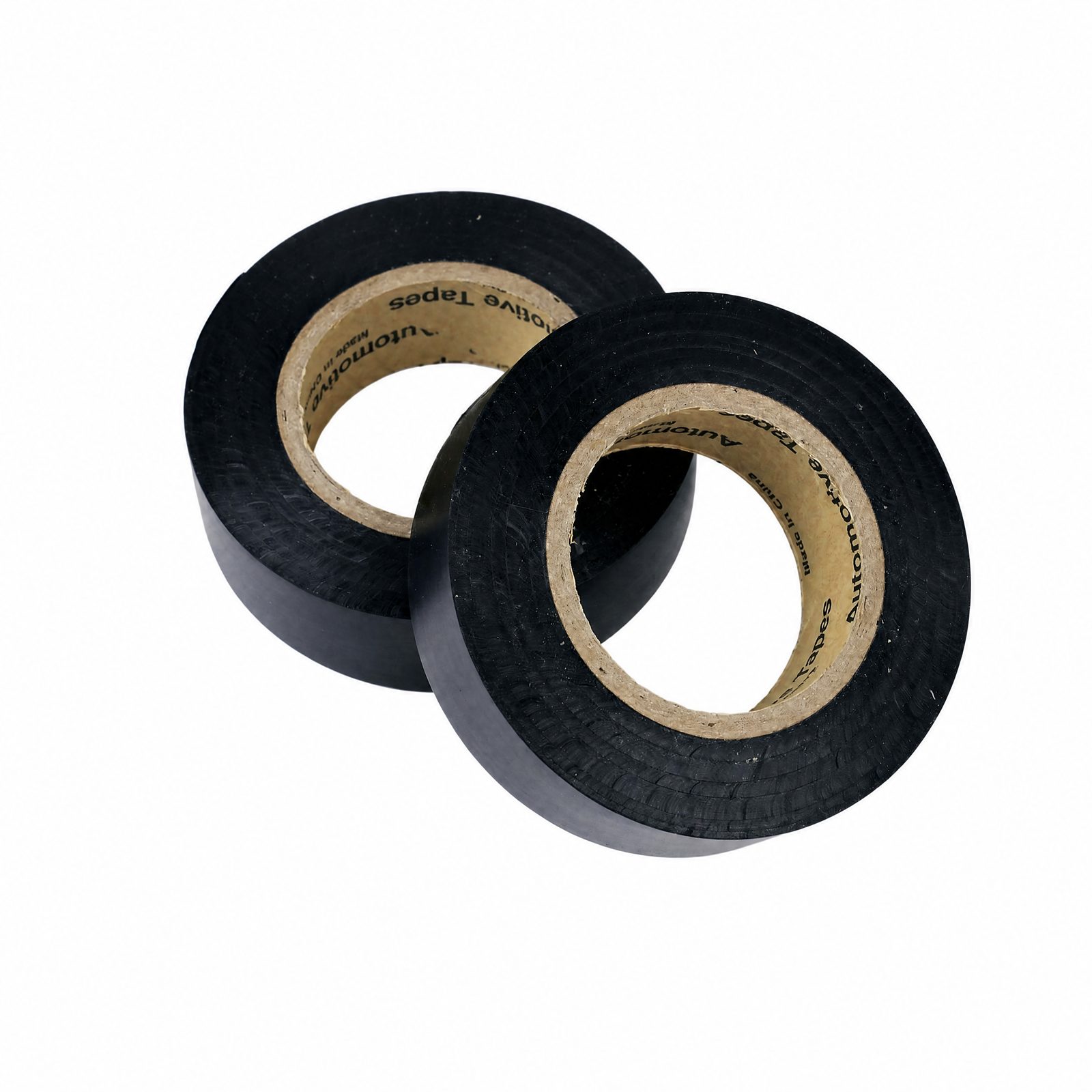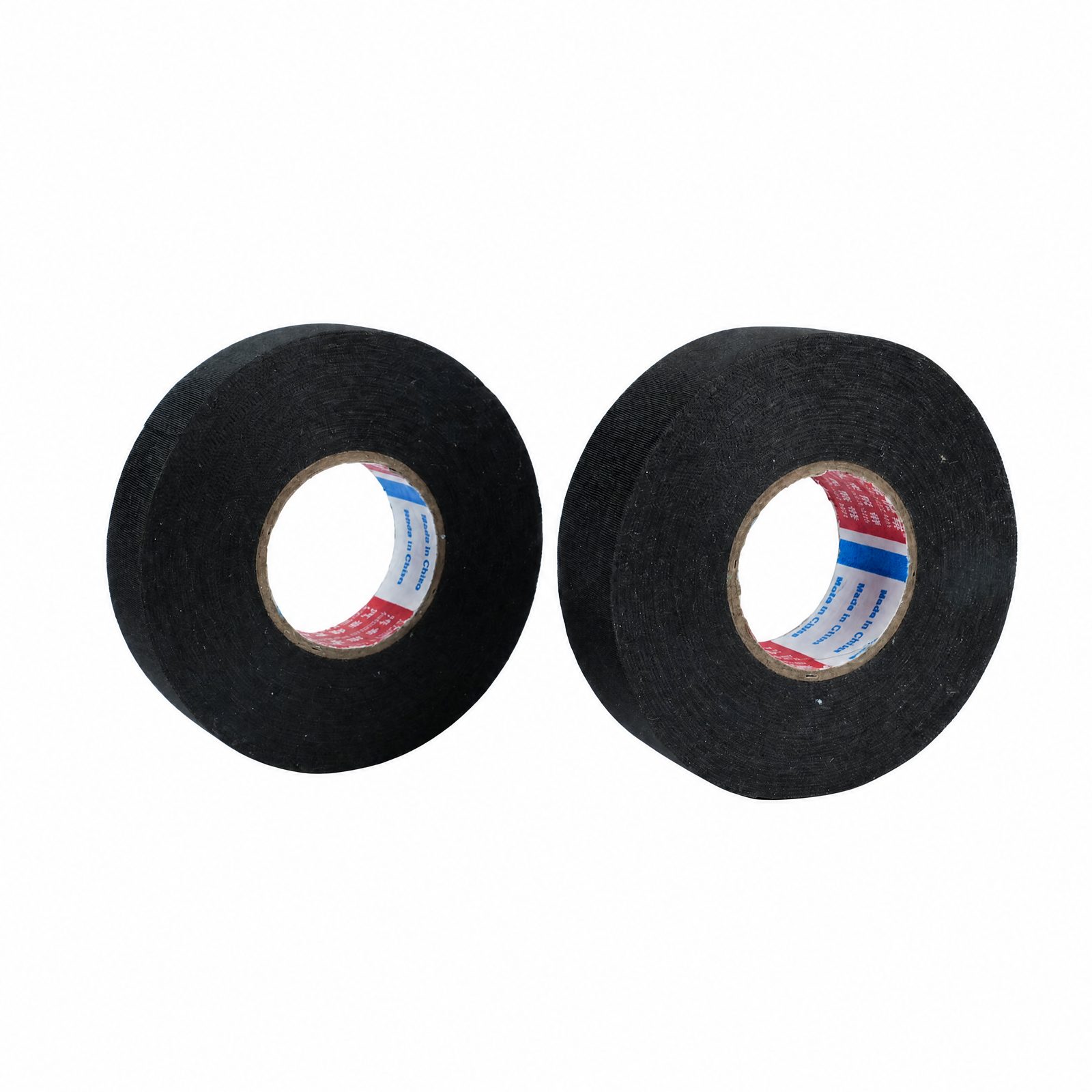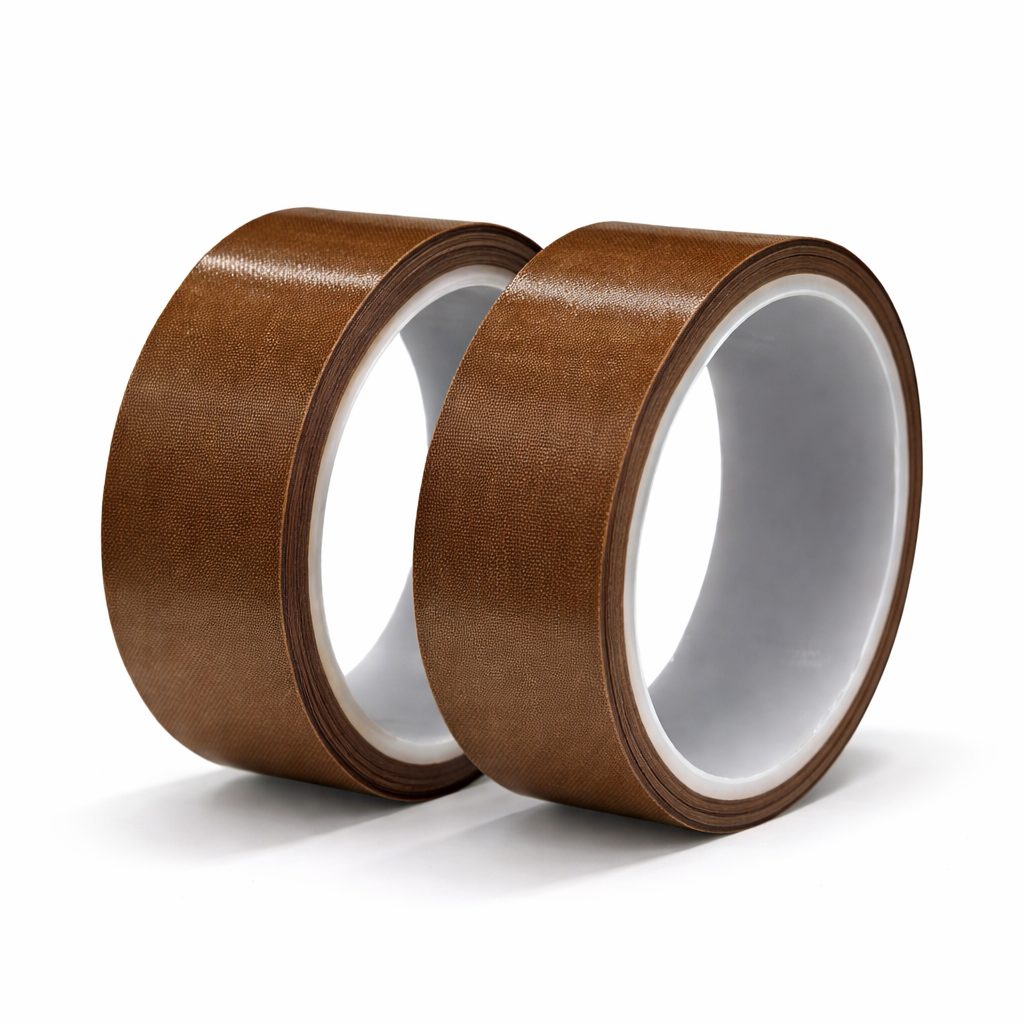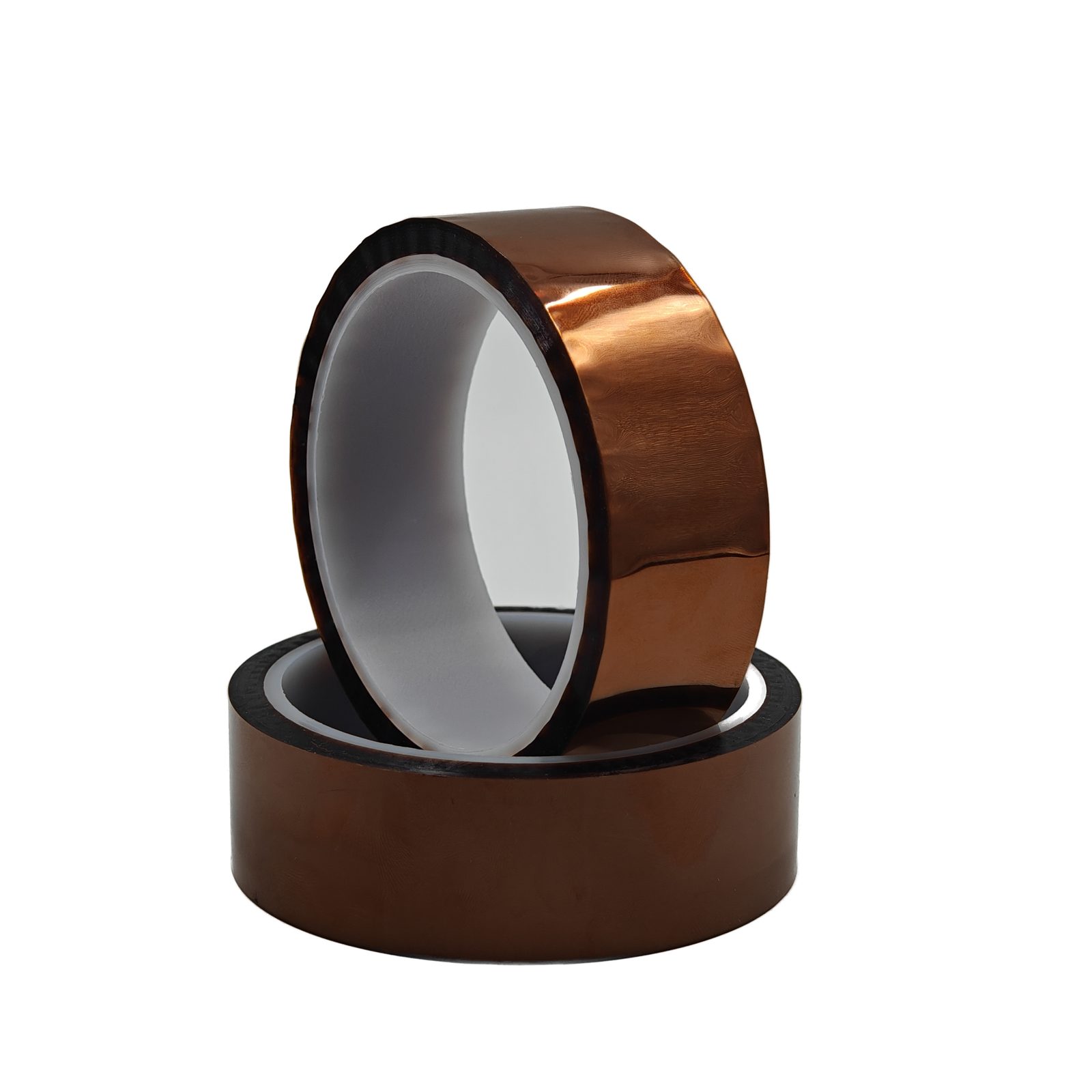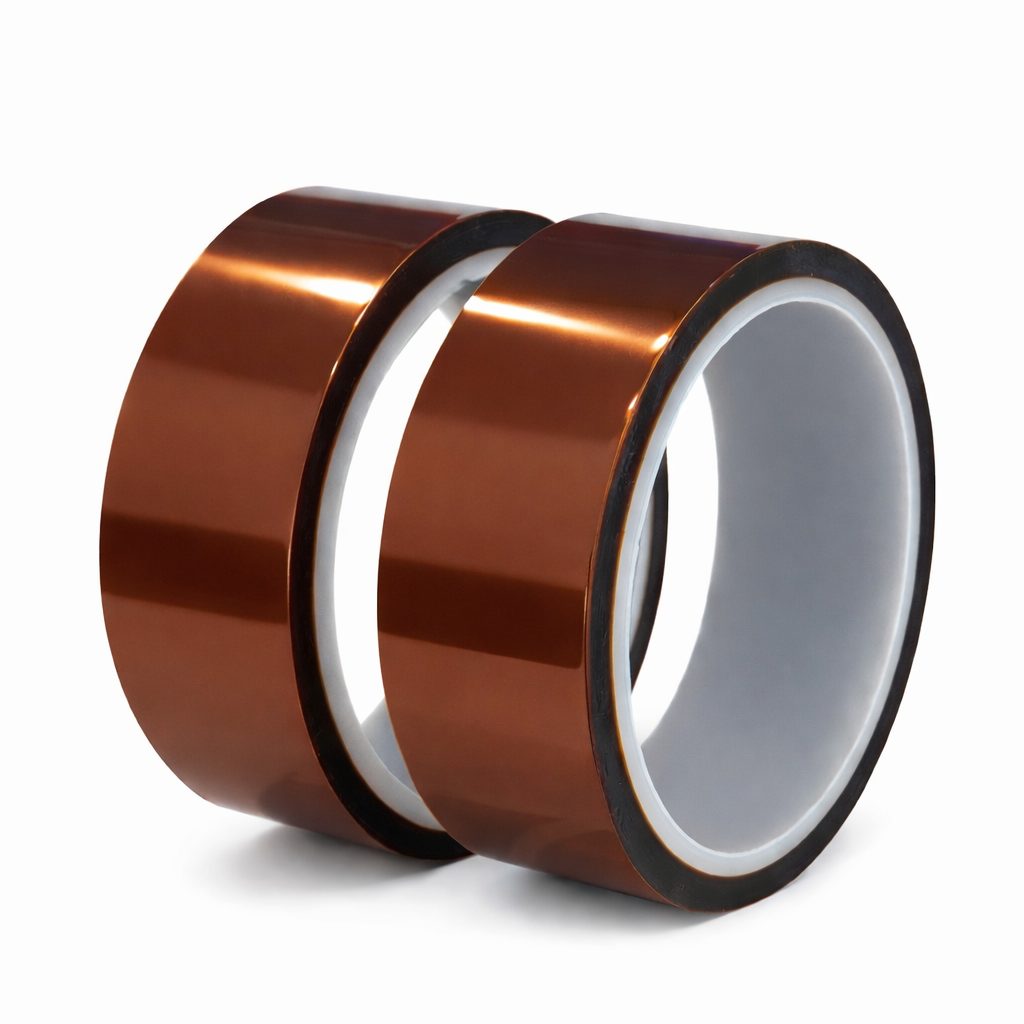
Three families cover almost every high-temperature tape application: PET polyester film, polyimide film and PTFE (Teflon) coated glass cloth. They overlap in price-sensitive cases and not at all in extreme ones, so the choice is usually driven by the temperature band and the surface behaviour you need.
The three families at a glance
| Family | Typical service temperature | Strength | Typical use |
|---|---|---|---|
| PET film tape | up to about 180 °C | Good dielectric strength, low cost, clean removal | Masking, splicing, general insulation |
| Polyimide (PI) film tape | up to about 260 °C short term, high continuous class | Very thin and tough | Wave-solder masking, class H insulation, battery work |
| PTFE coated glass cloth | −70 °C to 260 °C | Non-stick, low friction, high tensile strength | Heat-sealing bars, bag-making, release surfaces |
Choose PET film tape when
The application runs below about 180 °C and you need insulation or masking at a sensible cost. A 0.05 mm PET film tape with a silicone adhesive typically offers around 5 kV breakdown voltage, which covers most general electrical work, and it removes cleanly from most surfaces.
Choose polyimide tape when
Space and temperature are the constraints at the same time: fine-pitch masking that must come off without residue, class H winding insulation, or insulation inside a battery pack. Polyimide films are thin enough to fit a tight gap and still hold their electrical properties at temperatures where PET would deform.
Choose PTFE tape when
The problem is not insulation but adhesion — or rather the deliberate absence of it. PTFE coated glass cloth is used on heat-sealing jaws, form-fill-seal machines and release surfaces, where a non-stick, low-friction surface with high tensile strength is the whole point. It is also the only one of the three that is genuinely useful at both −70 °C and 260 °C.
What to put on the enquiry
- Continuous operating temperature and the peak with its duration
- Whether the tape is masking (temporary) or insulating (permanent)
- The surface it will be applied to
- Any dielectric requirement, in kV and thickness
- Whether clean removal is verified, and how
One more point worth stating: temperature ratings are not interchangeable between suppliers unless the test method is the same. When two datasheets disagree, the more conservative number is usually the one that reflects a continuous-use test.